Organisations have become increasingly focused on protecting employee identities. Multi-factor authentication, privileged access controls and identity monitoring are now important parts of many cybersecurity programmes.
But there is another category of identity that often receives less attention: non-human identities.
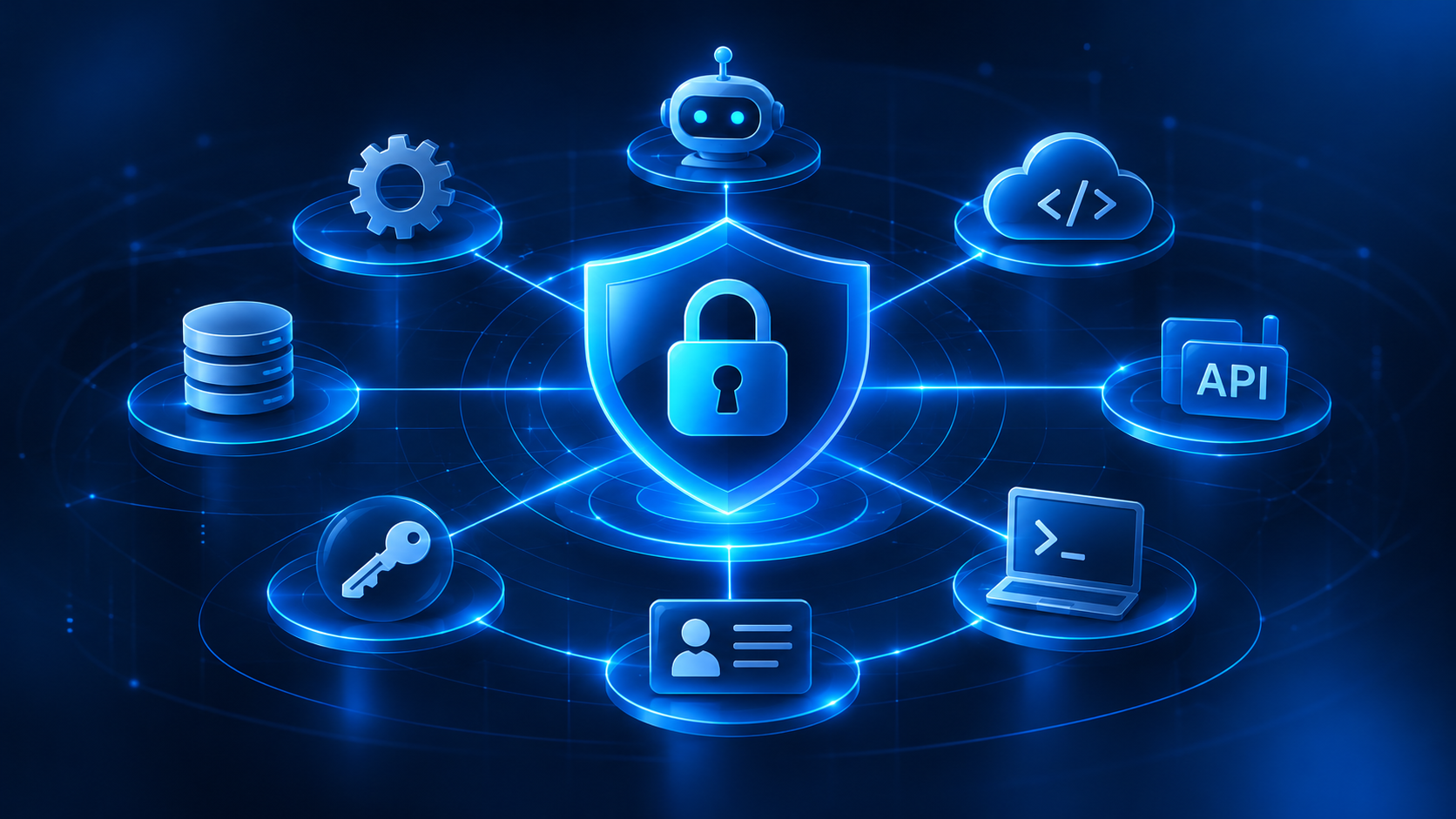
Applications, service accounts, APIs, automation scripts and cloud workloads all need identities to authenticate and access systems. These identities support everyday business operations, from processing data and running applications to connecting cloud services and deploying software.
The problem is that non-human identities can accumulate permissions, retain credentials long after they are needed and operate without the same level of oversight applied to employee accounts.
As organisations expand their cloud environments and automation capabilities, non-human identity security is becoming an increasingly important part of identity risk management.
What Are Non-Human Identities?
Non-human identities (NHIs) are digital identities used by applications, services, machines and automated processes to authenticate and access resources without direct human interaction.
Unlike employee accounts, these identities are created to support specific technical functions.
Common examples include:
- Service accounts: Accounts used by applications, scheduled tasks and background services to access systems and perform operations.
- Application identities: Identities assigned to software applications so they can authenticate and communicate with other services.
- API keys and access tokens: Credentials that allow applications and integrations to access APIs and other resources.
- Cloud workload identities: Identities used by virtual machines, containers and cloud applications to access cloud resources.
- Automation and CI/CD identities: Accounts used by deployment pipelines, scripts and automated processes to execute tasks across development and production environments.
These identities are essential to modern IT operations. However, they also introduce access relationships that security teams need to understand and govern.
Microsoft's guidance on workload identities highlights the challenges of securing applications and services that depend on credentials to access resources.
Why Non-Human Identities Are Becoming a Security Concern
The growing use of cloud services, application integrations and automation has expanded the number of identities operating across enterprise environments.
Unlike employees, non-human identities do not follow conventional onboarding and offboarding processes. They may be created during application deployment, configured for a temporary project or assigned to an integration that continues running for years.
Without clear ownership and lifecycle management, organisations can lose track of which identities exist, what they can access and whether they are still required.
This creates several security challenges.
1. Excessive Permissions Increase the Impact of Compromise
Non-human identities are frequently assigned permissions to perform specific technical tasks. However, those permissions can become broader than necessary.
For example, an application may only need permission to read information from a particular cloud storage resource. Instead, its identity may receive access to multiple resources or administrative privileges across an environment.
This creates unnecessary exposure.
If an attacker compromises the application or obtains its credentials, they may inherit the permissions assigned to that identity.
The consequences depend on the access available, but excessive permissions can allow attackers to:
- Access sensitive business data.
- Modify cloud resources.
- Retrieve additional credentials.
- Interact with other connected services.
- Escalate access within the environment.
Applying least-privilege access is therefore essential. Each identity should receive only the permissions required for its intended function, with unnecessary privileges removed.
2. Unused Service Accounts Create Forgotten Access Points
Service accounts are often created to support applications, integrations and automated processes.
Over time, systems change. Applications are replaced, projects are completed and integrations are retired.
However, their associated service accounts may remain active.
These unused accounts can become difficult to identify, particularly when they have no clearly assigned owner or documented business purpose.
An account that is no longer required but still has valid credentials and resource permissions represents unnecessary exposure.
Security teams should regularly review service accounts, identify inactive identities and confirm whether their access is still needed.
Google Cloud's service account security guidance recommends identifying unused service accounts, disabling them before deletion and treating them as managed resources.
3. Long-Lived Credentials Increase Exposure
Many non-human identities rely on credentials such as passwords, API keys, certificates and client secrets.
These credentials allow applications and services to authenticate, but their security depends on how they are stored, accessed and maintained.
Problems arise when credentials:
- Remain valid for extended periods without review.
- Are embedded in source code or configuration files.
- Are shared across multiple applications.
- Are stored in unsecured locations.
- Are not revoked when an application or integration is retired.
A compromised credential may provide an attacker with continued access until it expires or is revoked.
Organisations should use managed identity mechanisms where available, reduce reliance on static credentials and implement secure credential storage and rotation.
The OWASP Secrets Management Cheat Sheet provides practical guidance on protecting credentials, managing their lifecycle and monitoring their use.
4. Limited Visibility Makes Identity Risks Harder to Detect
Organisations often maintain separate systems for cloud infrastructure, applications, identity management and security monitoring.
This can make it difficult to build a complete picture of non-human identities across the environment.
For example, security teams may know that a service account exists but lack visibility into:
- Which applications depend on it.
- Which resources it can access.
- Whether it has privileged permissions.
- When its credentials were last used.
- Whether its activity matches its intended purpose.
Without this information, identifying unnecessary access and unusual activity becomes more challenging.
Centralised visibility helps security teams understand how identities connect to resources and where excessive permissions or unexpected access patterns exist.
This is particularly important in hybrid environments where identities may span on-premises Active Directory, Microsoft Entra ID and multiple cloud platforms.
5. Poor Lifecycle Management Allows Identity Sprawl
Non-human identities need lifecycle management just like employee accounts.
However, their creation and removal are often handled by different teams, applications or deployment processes.
An identity may be created for a specific integration without a documented owner. Another may be retained after a system is decommissioned. Some may have credentials that are never reviewed or permissions that remain unchanged as the environment evolves.
Over time, these issues contribute to identity sprawl.
Effective lifecycle management should cover:
- Creation: Establish a documented purpose and assign an owner when an identity is created.
- Access assignment: Grant only the permissions needed for its intended function.
- Monitoring: Track authentication activity, resource access and changes to permissions.
- Review: Regularly validate whether the identity and its access remain necessary.
- Decommissioning: Disable and remove identities when their associated applications or workloads are no longer required.
Automating these processes where possible can reduce the number of unmanaged identities across the environment.
How Organisations Can Improve Non-Human Identity Security
Addressing non-human identity risks requires more than simply identifying service accounts or changing credentials.
Security teams need a consistent approach to understanding, governing and monitoring these identities throughout their lifecycle.
The following practices provide a useful starting point.
1. Build an Inventory of Non-Human Identities
Identify service accounts, application registrations, service principals, managed identities, API credentials and other workload identities across the environment.
Record their owners, business purpose, permissions and associated resources.
An accurate inventory provides the foundation for effective identity governance.
2. Apply Least-Privilege Access
Review permissions assigned to applications and service accounts.
Remove unnecessary administrative privileges and restrict access to the specific resources each identity needs.
Where possible, use dedicated identities for separate applications and workloads rather than sharing credentials across multiple systems.
3. Reduce Dependence on Static Credentials
Use managed identities and workload identity federation where supported.
These approaches can reduce the need to store long-lived credentials in applications, scripts and deployment pipelines.
Where static credentials remain necessary, store them securely, monitor their use and implement appropriate rotation and revocation processes.
4. Monitor Identity Activity
Track authentication events, permission changes and resource access involving non-human identities.
Look for unexpected activity, such as an application accessing resources outside its normal scope or a service account suddenly using elevated permissions.
Monitoring should also help security teams identify unused identities and credentials that remain active without a clear business requirement.
5. Establish Clear Ownership and Accountability
Every non-human identity should have a defined purpose and accountable owner.
Ownership makes it easier to review access, investigate unusual activity and determine whether an identity should remain active.
Without accountability, identities can remain unmanaged long after the applications or processes they support have changed.
Non-Human Identities Should Be Part of Your Identity Security Strategy
Securing employee accounts is only one part of managing identity risk.
Applications, service accounts, automation tools and cloud workloads also have access to critical business resources. When these identities operate with excessive permissions, unmanaged credentials or limited oversight, they can create security gaps that are difficult to identify.
As organisations become more dependent on automation and interconnected cloud services, non-human identity security needs to become a recognised part of their broader identity security strategy.
The objective is not simply to maintain an inventory of accounts. It is to understand what each identity can access, why that access exists and whether it remains appropriate.
CyberDNA helps organisations understand identity-related exposure across their environments, identify security weaknesses and improve their overall resilience.
Knowing which identities exist is only the starting point. Understanding the access they hold is what helps organisations reduce risk.